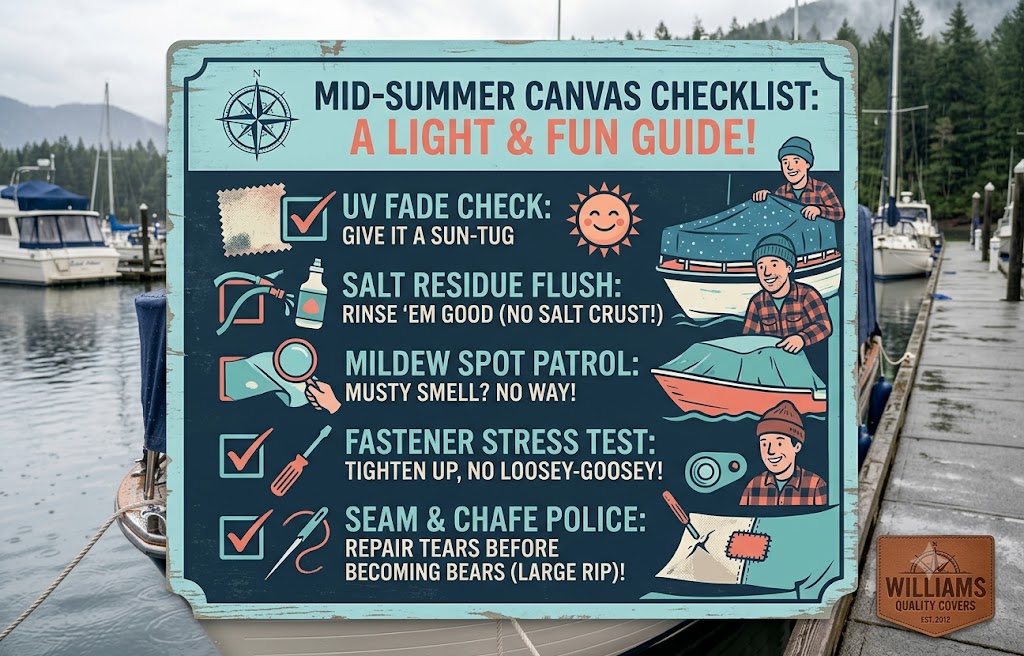
Summer is peak season for canvas damage. Three months of constant UV exposure, salt spray, wind, and moisture create the perfect storm for fade, mildew, hardware corrosion, and seam breakdown. The good news: most damage is preventable. Here’s what to watch for mid-summer and how to keep your canvas in top shape.
Why Mid-Summer Matters
By July, your boat covers, enclosures, and canvas have been in hard conditions for weeks. UV rays are strongest. Salt residue has built up. Moisture gets trapped in seams and folds. This is when small problems become big ones—but it’s also your chance to catch and fix them before they get expensive.
What to Check: Five Mid-Summer Canvas Issues
1. UV Fade & Brittleness
What happens:
Sun bleaches color and weakens fabric fibers. Sunbrella and other solution-dyed fabrics resist fade longer than naturally dyed canvas, but nothing is immune to months of direct UV exposure.
What to look for:
- Color noticeably lighter than it was in May
- Fabric feels stiffer or more brittle than normal
- Faded spots where covers fold or overlap
What to do:
- Inspect regularly. Check exposed surfaces once a week. Peak UV is 10 AM–3 PM.
- Increase shade when docked. If your boat sits in the same spot, use an additional cover or position it to minimize sun on your canvas.
- Clean regularly. Dirt and salt accelerate UV damage. A quick freshwater rinse removes salt residue that amplifies sun damage.
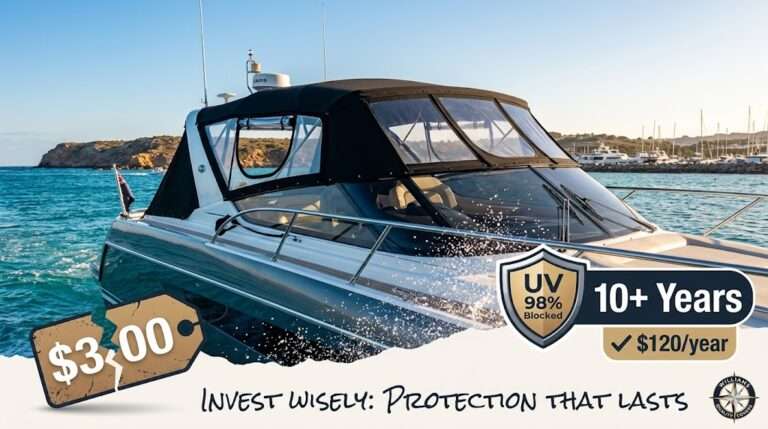
- When to upgrade: If fade is severe or fabric feels brittle, the cover is near end of life. A custom replacement built with UV-rated Sunbrella is worth the investment—it’ll last 10+ years instead of 3–5.
- Shop custom boat covers in Sunbrella
2. Salt Residue Buildup
What happens:
Sea spray and salt air deposit crystalline residue on canvas and hardware. Over weeks, this residue traps moisture, accelerates corrosion, and compromises fabric strength.
What to look for:
- White or cloudy crust on fabric or hardware
- Stiff canvas that doesn’t fold naturally
- Discoloration or dark spots under hardware (sign of trapped moisture)
What to do:
- Rinse weekly with fresh water. A gentle freshwater spray removes salt before it crystallizes. Don’t use a pressure washer—it can force salt into seams.
- Dry after rinsing. Let canvas air-dry completely. If moisture gets trapped, mildew follows.
- Clean hardware separately. Use a soft brush and mild soap to scrub stainless steel fasteners and snaps. Dry thoroughly.
- Don’t let it sit wet. Wet canvas + salt residue + heat = mildew in 24–48 hours.
Pro tip: Store covers in a dry space when not in use. Even a week of damp conditions can trigger mildew growth.
3. Mildew & Moisture Damage
What happens:
Summer heat + humidity + trapped moisture = mildew growth within 48 hours. Mildew stains fabric, weakens fibers, and smells terrible.
What to look for:
- Dark spots or streaks on canvas (especially in fold lines or shaded areas)
- Musty smell
- Sticky or slimy texture in seams or under hardware
- Visible fuzz (advanced mildew)
What to do:
- Prevention is key. Never store or fold wet canvas. Always air-dry completely.
- Increase ventilation. Prop covers open when docked to allow air circulation. Moisture needs to escape.
- Catch early. Mildew is easiest to treat in the first week. A freshwater rinse + thorough dry often stops it.
- For established mildew: Mix 1 part white vinegar to 3 parts water. Spray on affected areas, let sit 10–15 minutes, rinse with fresh water, and dry completely. Repeat if needed.
- When to call a pro: If mildew has spread across large sections or you see dark discoloration inside the weave, the fabric is compromised. Replacement is safer than salvage.
Note: Never use bleach on Sunbrella or solution-dyed fabrics—it will permanently lighten the color.
4. Hardware Corrosion & Fastener Failure
What happens:
Stainless steel, brass, and marine-grade hardware resist rust, but salt water + UV still cause corrosion and discoloration. Fasteners can seize, snaps can stick, and zippers can freeze.
What to look for:
- White or greenish discoloration on snaps, grommets, or hardware
- Stuck or hard-to-operate zippers
- Loose fasteners (use a wrench to check)
- Rusted or pitted hardware edges
What to do:
- Rinse and dry hardware weekly. Same routine as canvas.
- Lubricate moving parts. Apply silicone spray (not WD-40—it attracts dust) to zippers and snaps monthly. Work the mechanism to distribute lubricant.
- Tighten fasteners. Check bolts, screws, and rivets monthly. Salt spray can loosen connections.
- Don’t sand or scrape. Aggressive cleaning removes protective oxide layer. Use a soft brush and mild soap instead.
- When to replace: Severely pitted hardware or frozen zippers need replacement. Corroded grommets can be re-pressed with new stainless hardware.
- Shop winch covers and custom hardware solutions built with marine-grade fasteners.
5. Seam & Chafe Breakdown
What happens:
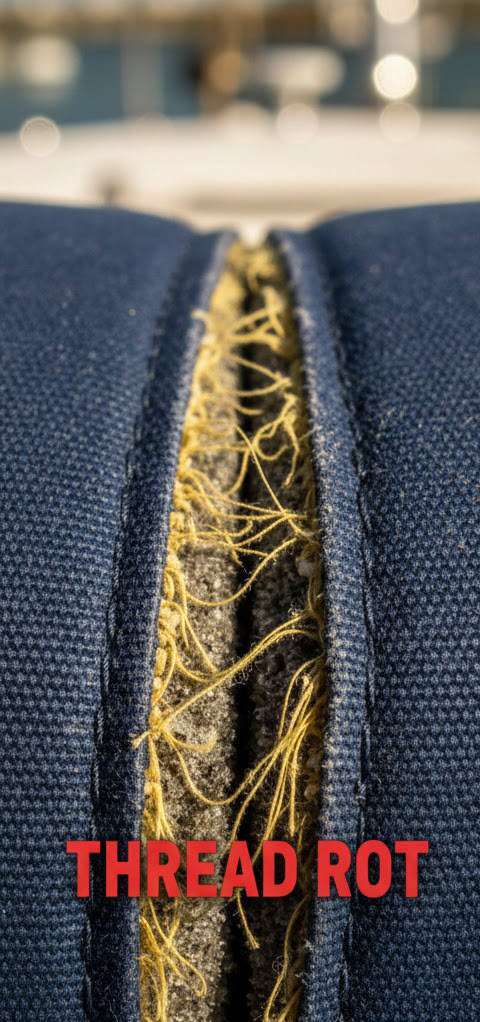
Seams take constant stress from wind, waves, and movement. Salt, UV, and moisture accelerate thread breakdown. Chafe points (where canvas rubs against lifelines, stanchions, or rigging) fray and weaken.
What to look for:
- Visible thread separation or loose stitching
- White fuzz or “hair” along seam lines
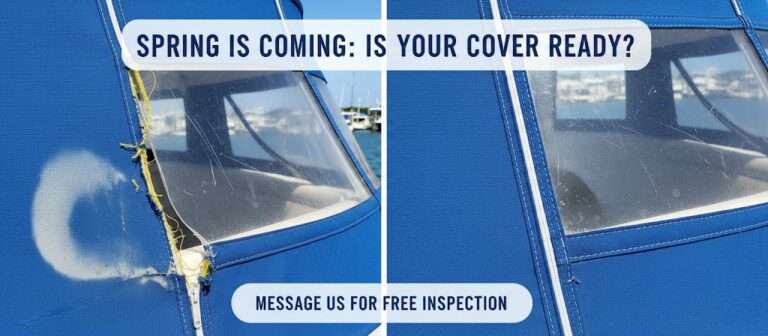
- Holes or tears at high-stress points (grommets, corners, attachment points)
- Fraying edges where canvas meets hardware
What to do:
- Inspect seams visually. Run your hand along major seams weekly. You’ll feel loose threads or separation before it becomes a tear.
- Apply seam sealer to small gaps. Products like Seam Grip or flexible fabric cement can extend the life of a seam that’s beginning to separate. Clean, dry, and apply per product instructions.
- Protect chafe points. Wrap high-friction areas with sail tape or chafe guards. This prevents canvas from rubbing raw against rigging.
- Reinforce with patches. For small tears or damage around grommets, self-adhesive canvas patches work in a pinch. Clean the area, dry completely, and apply patch per instructions. This buys time before professional repair.
- When to call a pro: Seams that are actively separating across large sections, multiple tears, or structural damage need professional re-stitching. It’s worth the cost to avoid complete failure mid-season.
- Shop chafe guards and protective accessories designed to reduce wear.
Mid-Summer Canvas Checklist (Printable)
Download and print this checklist. Complete it every two weeks during summer—it takes 15 minutes and catches problems early.
Weekly (Quick Walk-Around)
- Inspect canvas for fade, discoloration, or stiffness
- Check for salt residue on fabric and hardware
- Look for mildew spots or musty smell
- Test zippers and snaps for smooth operation
Bi-Weekly (Hands-On)
- Rinse canvas and hardware with fresh water
- Dry thoroughly (let air-dry 4+ hours)
- Inspect seams for loose threads or separation
- Check for chafe damage along high-stress edges
- Tighten all fasteners (bolts, screws, rivets)
- Lubricate zippers and snaps with silicone spray
- Look for any new tears or holes
Monthly (Deep Dive)
- Wash canvas with mild soap and soft brush
- Inspect and clean all hardware with soft brush
- Check grommets for corrosion or loose rivets
- Review fold lines and creases for mildew
- Test structural integrity (gentle tug on attachment points)
Red Flags: Call a Pro
- Large seam separation (>2 inches)
- Active mildew across >10% of canvas
- Severe hardware corrosion or frozen zippers
- Tears or holes >1 inch
- Fabric feels brittle or chalky
- Canvas shrinkage affecting fit
When to Repair vs. Replace
Repair if:
- Issue is localized (single seam, one tear, specific chafe spot)
- Canvas is <3 years old
- Overall condition is still good
- Repair cost is <30% of replacement
Replace if:
- Multiple issues across different areas
- Canvas is >5 years old
- Fabric is brittle, severely faded, or structurally weak
- Repair cost approaches replacement cost
A custom cover built to fit your boat and your rigging outlasts and outperforms a generic replacement. It’s an investment that pays back in durability and protection.
Protect What Matters
Your canvas does a job—it protects your boat, your gear, and your investment. Mid-summer maintenance takes 15 minutes every two weeks and catches 95% of problems before they become expensive.
Stay on top of it now. Your cover (and your boat) will thank you in September.
Questions about your specific covers? Contact us or call 425-553-6900. We build custom solutions and repair covers built to last—handmade the way marine gear should be.
Williams Quality Covers
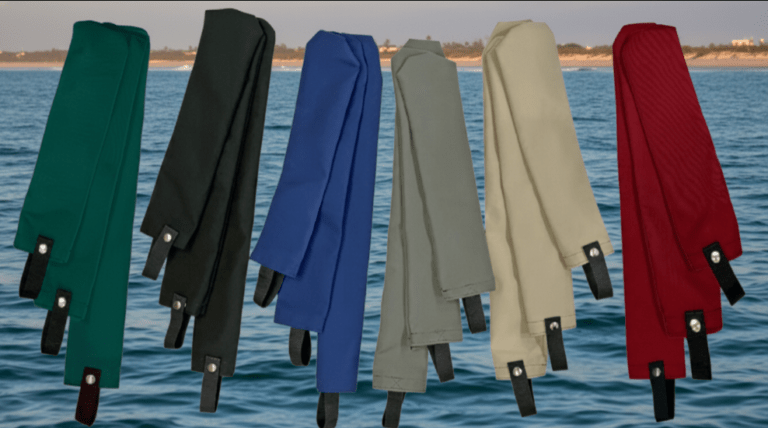
Custom boat covers, burgee covers, winch covers & more
Shop custom covers | Follow us on Instagram | Kirkland, WA