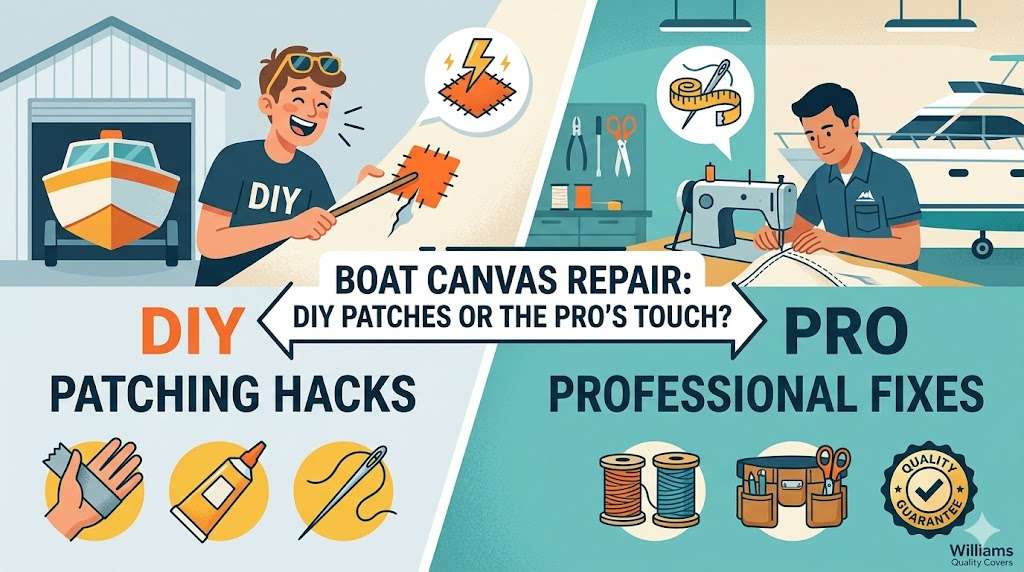
Your boat’s canvas cover has a tear. Or maybe a seam is coming loose. Your first instinct is probably: “Can I fix this myself?”
Sometimes, the answer is yes. However, a DIY fix can also create a bigger problem down the road.
Below, we’ll walk through the most common damage types—and when each warrants a professional boat canvas repair.
Small Punctures or Tears (Under 3 inches)
The quick fix: A patch kit works fine for small, isolated tears.
What you need:
- Canvas patch kit (available at marine supply stores)
- Scissors
- Adhesive (usually included)
How to do it:
- Clean the area around the tear thoroughly and let it dry completely
- Cut your patch at least 1 inch larger than the tear on all sides
- Round the corners of the patch (square corners peel up faster)
- Apply adhesive per the kit instructions
- Press the patch firmly and hold for 30-60 seconds
- Let the adhesive cure per instructions (usually 24 hours) before using the cover
Pro tip: Use a patch on both sides of the tear for better durability.
Additionally, if the tear is fraying badly or sits in a high-stress area (near seams or corners), professional boat canvas repair ensures better long-term durability.
Seam Separations (Stitching Coming Apart)
Should you DIY this? In most cases, probably not.
Here’s why: A seam separation isn’t just a cosmetic issue. It’s a breach in your boat’s protection. If you stitch it back together without proper marine-grade materials and techniques, water will find its way in—and you’ll have a much bigger problem.
When to call a pro: Any seam that’s separating or pulling away from the mounting hardware.
Professional seam repair involves:
- Removing the old thread completely
- Cleaning and preparing the joint
- Re-stitching with UV-resistant, marine-grade thread
- Sealing the seam with compound to prevent water infiltration
In short, this takes specialized equipment and expertise. It is not a DIY job.
Water Pooling (Not Actually Damage, But…)
The warning sign: Water collecting in low spots on your cover.
What this means: Your cover is sagging or stretching or not draining properly.
Quick fixes you can try:
- Loosen the cover slightly and reposition it to eliminate low spots. If possible gently add tension
- Use a pole or similar to lift up the area that is sagging to see if it resolves the issues. You can purchase these on Amazon or at a marine supply shop. Add a small, wooden spacer under the cover at the pooling point (use soft wood so it doesn’t puncture the canvas)
- Check that your drainage points aren’t blocked by debris
When to call a professional: If the pooling persists after these adjustments, your cover might have structural issues—design flaws, hardware failure, or material degradation. That needs a professional assessment.
Mold or Mildew Growth
For light surface growth, a good scrub with a marine mildew cleaner is usually enough to handle it yourself.
However, if mildew is extensive, deep-seated, or keeps returning after cleaning, call a pro. This typically indicates a ventilation problem or moisture trap that requires a design fix.
Hardware Corrosion or Failure
Dealing with rusted grommets or snaps? Here’s how to tell whether it’s a DIY fix or a bigger problem.
For example, if the hardware is surface-rusty but still functional, you can slow the corrosion by:
- Cleaning with vinegar and a soft brush
- Drying immediately
- Applying a light coat of naval jelly or marine wax
But if the hardware is crumbling or separating: Don’t patch. Call a pro. Corroded hardware means water is getting behind the grommet into the cover material itself. That’s a professional repair.
The Real Decision Framework
In general, here’s the rule of thumb:
DIY if: The damage is small, localized, away from seams and stress points, and you’re comfortable with a simple patch kit.
Call a pro if:
- The damage is near or on a seam
- Water is getting inside the cover
- Hardware is involved
- The damage is large (over 3 inches)
- You’re not sure what caused it
- The same problem keeps happening
Why Professional Repair Matters
Here’s the honest truth: A bad DIY repair can turn a $200 fix into a $1,200 replacement.
Some patches held for six months, then failed catastrophically. Others involved amateur seam stitches that looked fine on the outside but let water pour in. In more than a few cases, covers were held together by hope and optimism—until they weren’t.
Ultimately, your boat deserves better. And frankly, so do you.
So, if you’ve spotted damage and aren’t sure whether it’s a DIY boat canvas repair or a job for the pros, send us a photo. We’ll give you an honest answer—quick fix or professional attention—at no charge.
Get in touch today—we’re here to help your boat stay protected.
Need a replacement cover instead of a repair? Shop our Burgee & Flag Covers and other marine gear, handmade in the USA.